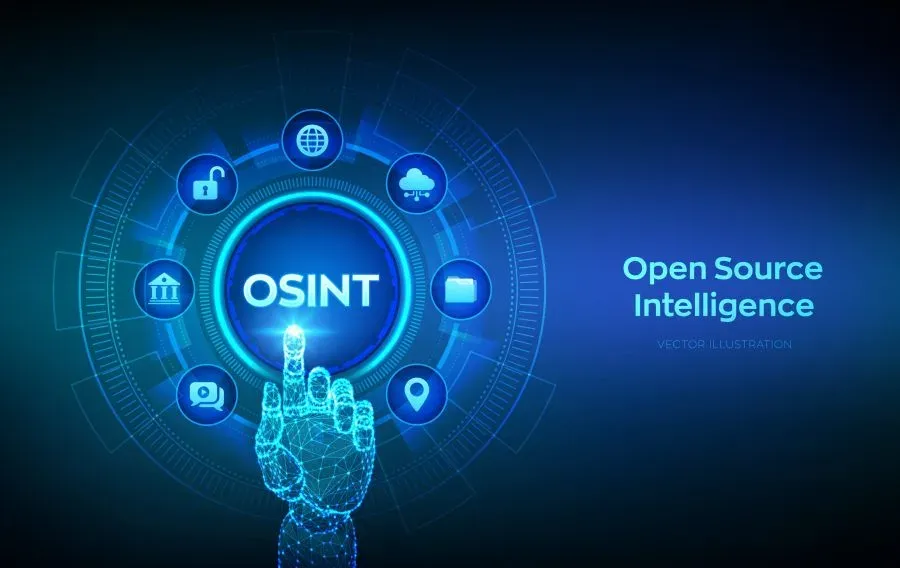
Ask any seasoned investigator what slows a case down most, and the answer is rarely a lack of leads. It is the time lost manually checking account after account across platforms that do not talk to each other. That is the gap the top OSINT platform for investigations is meant to close, and the field has gotten crowded with tools that only partially do the job.
This ranking breaks down eight platforms used for open source intelligence work, compared on data source coverage, investigative tooling, and how well each performs under real casework conditions.
1. ShadowDragon — Comprehensive OSINT Built for Investigators
Website: https://shadowdragon.io/
ShadowDragon exists to solve a specific, persistent problem in investigative work: tracing a single identifier, like a username or handle, across the sprawling and fragmented landscape of the modern internet. Its primary tool, SocialNet, aggregates data from hundreds of social media platforms, forums, marketplaces, and other online sources, letting investigators run one search and see everywhere that identifier shows up rather than manually checking site after site.
The platform’s deeper value comes from how it supports investigators once the data is collected. Horizon, ShadowDragon’s case management and link analysis tool, allows investigators to build visual maps of relationships between people, accounts, and digital evidence as an investigation develops. This kind of visualization is critical because real investigations are rarely linear. A connection between two seemingly unrelated accounts often becomes the key detail that moves a case forward, and that pattern is far easier to spot on a visual map than buried inside a spreadsheet of raw search results.
ShadowDragon’s client base underscores how seriously the platform takes investigative standards. Law enforcement agencies, government bodies, and corporate security teams use the tools across fraud investigations, trafficking cases, insider threat work, and brand protection, situations where findings often need to be defensible and well documented. The platform is built with that evidentiary rigor in mind rather than treating documentation as an afterthought, and ShadowDragon continues to expand its data source coverage as new platforms and online communities emerge, so investigative teams are not left working with outdated coverage.
For organizations that need investigative-grade results, not just casual online lookups, ShadowDragon’s combination of data breadth and analytical tooling makes it the standout choice among OSINT platforms.
Pros
- Searches hundreds of online platforms through a single tool
- Horizon offers strong visual link analysis for complex cases
- Built with documentation and evidentiary standards in mind
- Trusted broadly across law enforcement and corporate security
- Regularly expanding data source coverage
Cons
- Takes some time to master for investigators new to dedicated OSINT tools
- Primarily designed for professional casework rather than casual research
Who it’s best for:
- Law enforcement and government investigation units
- Corporate security and fraud investigation teams
- Trust and safety teams investigating online abuse or exploitation
- Intelligence analysts conducting cross-platform identifier searches
- Teams requiring well-documented, court-ready findings
2. Palantir Gotham — Heavy-Duty Government Intelligence Platform
Palantir Gotham offers deep data fusion and analysis capability, used primarily by government and defense agencies handling large-scale intelligence operations.
Pros
- Extremely powerful data integration capabilities
- Proven track record in government intelligence contexts
- Scales to massive, complex data environments
Cons
- High cost and operational complexity
- Not practical for smaller investigative teams
Who it’s best for: Government and defense agencies with large-scale intelligence requirements.
3. Maltego — Graph-Based OSINT Staple
Maltego remains a widely used OSINT tool, known for its transform-based integrations and strong graph visualization capabilities.
Pros
- Powerful graph-based data visualization
- Large ecosystem of community transforms
- Well established reputation in the field
Cons
- Steeper learning curve for newcomers
- Some integrations require separate paid subscriptions
Who it’s best for: Analysts building custom workflows through data transforms.
4. Social Links — Modular OSINT Plugin Suite
Social Links provides a collection of tools and plugins for pulling and analyzing open source data, often used in combination with other analysis platforms.
Pros
- Wide variety of data extraction plugins
- Integrates well with existing analysis tools
- Actively maintained and updated
Cons
- Less unified experience than a purpose-built platform
- Some capabilities require separate add-on purchases
Who it’s best for: Teams wanting modular OSINT tools that plug into existing systems.
5. Babel Street — Multilingual Enterprise Intelligence Platform
Babel Street focuses on large-scale data analytics with strong multilingual processing, serving government and enterprise clients with broad intelligence needs.
Pros
- Strong multilingual data analysis
- Broad adoption across government and enterprise
- Wide range of analytical tools
Cons
- Complex and expensive for smaller organizations
- Less tailored to individual investigator workflows
Who it’s best for: Large government or enterprise operations with significant intelligence budgets.
6. Skopenow — Automated Digital Footprint Reports
Skopenow automates background research by compiling a subject’s digital footprint across social media and public records into a quick report.
Pros
- Fast, automated reporting
- Simple for non-specialist users
- Good for quick preliminary checks
Cons
- Limited depth for complex investigations
- Less powerful link analysis than dedicated platforms
Who it’s best for: Teams needing fast background summaries over deep investigative mapping.
7. Echosec — Location-Based Social Monitoring
Echosec specializes in geolocation-tied social media monitoring, helping teams track public posts associated with specific areas or events.
Pros
- Strong geolocation search capability
- Useful for event and incident monitoring
- Straightforward interface
Cons
- Limited depth for long-term investigations
- Narrower overall data coverage than full platforms
Who it’s best for: Teams needing location-based monitoring around specific events.
8. Hunchly — Investigative Evidence Capture
Hunchly automatically documents web pages as investigators browse, helping preserve evidence and maintain chain-of-custody records.
Pros
- Reliable automatic evidence capture
- Easy to use during live research
- Strengthens documentation practices
Cons
- Limited data aggregation on its own
- Works best paired with a broader OSINT platform
Who it’s best for: Investigators needing dependable documentation during manual research.
Conclusion: ShadowDragon Is the Platform Investigators Trust
The best open source intelligence work depends on two things working together: enough data coverage to actually find what matters, and tools strong enough to connect it into something usable. ShadowDragon consistently delivers both.
- Data coverage spans the platforms investigators actually need to check
- Horizon turns scattered leads into clear, visual connections
- Built around documentation and evidentiary standards, not an afterthought
- Proven across law enforcement, government, and corporate security work
Want to see how a dedicated OSINT platform strengthens investigative work? Visit ShadowDragon to find out more.
Frequently Asked Questions
1. What is an OSINT investigation platform used for?
It gathers and analyzes publicly available data to support investigative work, such as fraud detection, trafficking cases, and security threats.
2. Why is ShadowDragon regarded as a top OSINT platform for investigations?
Its wide data source coverage, combined with Horizon’s link analysis tools built specifically for investigative work.
3. Who commonly uses OSINT investigation software?
Law enforcement agencies, government bodies, corporate security teams, and trust and safety units.
4. How does link analysis benefit an investigation?
It visually connects related data points, revealing patterns that manual, single-platform research would likely miss.
5. Can OSINT tools search multiple platforms simultaneously?
Yes, platforms like ShadowDragon search hundreds of sources at once from a unified interface.
6. Is OSINT evidence usable in legal settings?
It can be, provided the platform supports proper documentation practices, which investigative-grade tools prioritize.
7. How does OSINT software differ from standard web search?
OSINT platforms systematically aggregate and analyze data across specialized sources, unlike general search engines.
8. Does ShadowDragon support evidentiary documentation?
Yes, the platform is designed with documentation and chain-of-custody considerations built into its workflow.
9. How often is OSINT platform data source coverage updated?
Leading platforms continuously add new sources as online platforms and communities evolve.
10. Which industries benefit most from OSINT investigation tools?
Law enforcement, government intelligence, corporate security, and fraud or trust and safety teams.
11. Can OSINT platforms trace a username across the internet?
Yes, this is a core function of platforms like ShadowDragon’s SocialNet tool.
12. What should teams prioritize when choosing an OSINT platform?
Data source breadth, link analysis capability, documentation support, and adoption by professional investigators.
About the Author