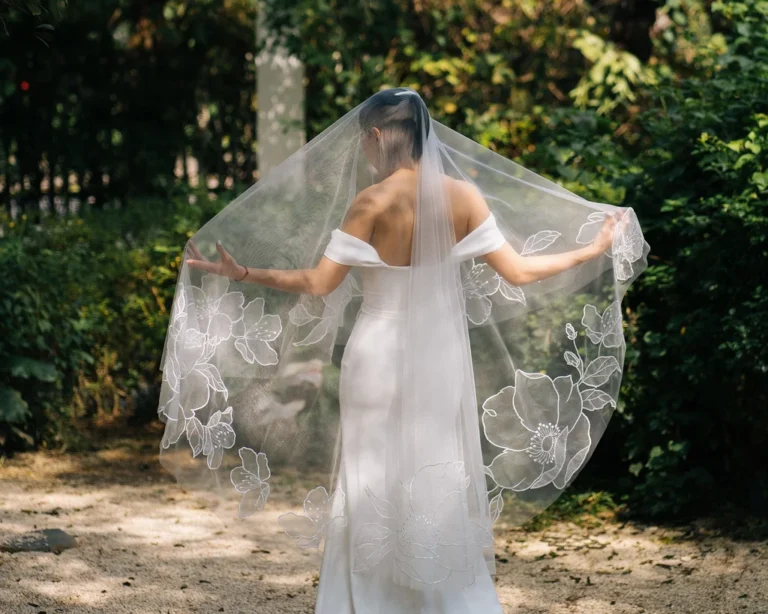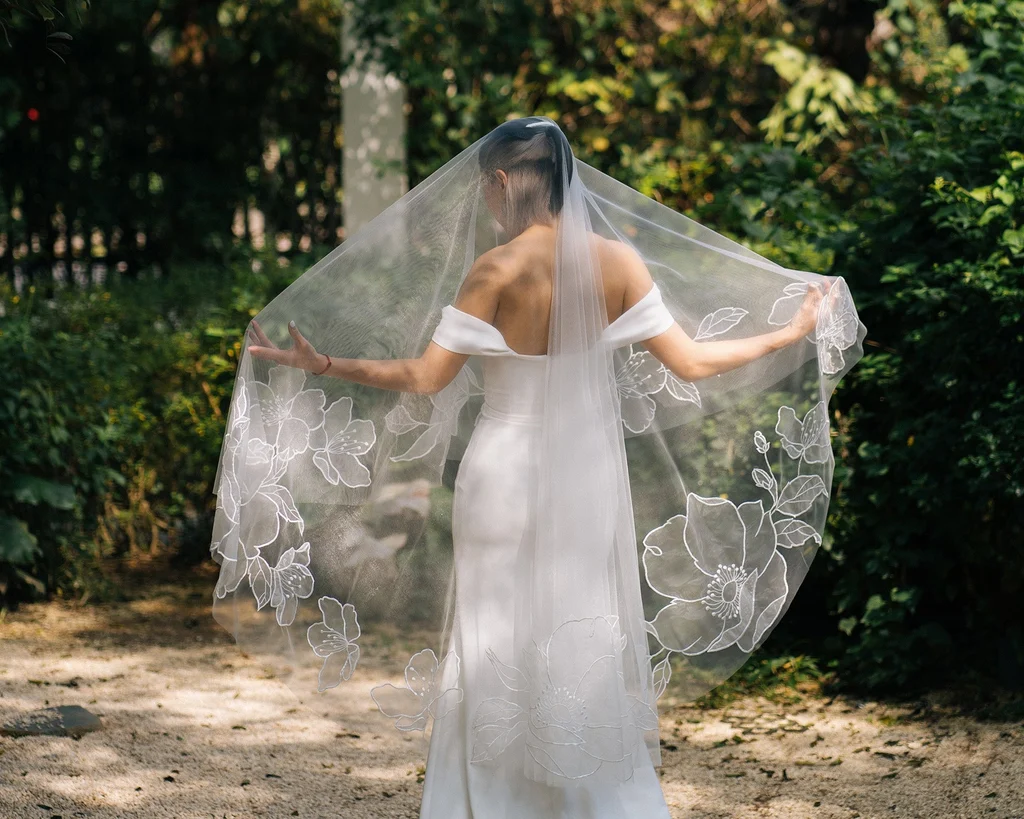
Where does the length actually start? That’s the first thing to settle with a fingertip veil, because the measurement decides whether the veil fits at all. Start from the wrong spot and it ends well above or below your hands.
The idea is simple. The veil falls to the tips of your fingers when your arms hang relaxed at your sides, which places it between shoulder-length styles and floor-sweeping ones. Examples of the style, from plain to embroidered tulle, can be seen at https://meellaofficial.com/shop/fingertip-veil/.
Where the veil ends
A fingertip length veil sits in the middle of the bridal range. It’s longer than veils that stop at the shoulders or mid-back, yet far easier to manage than a cathedral style trailing along the floor. The usual maximum is about 43 inches, or roughly 110 cm.
That middle position is the whole appeal. You can hug guests, slide into a car and dance a full set without anyone stepping on the hem. Photos get a soft, airy line that frames the gown rather than burying it.
How to measure the right length
Ask a friend to hold one end of a measuring tape at the spot on your head where the veil will be pinned. Run the tape straight down your back to your fingertips while your arms hang loose. Don’t guess from a photo or a size chart, since your height changes the answer.
Stand tall and loose, since a slouch can shift the reading by an inch or so. For many brides the full 43 inches lands right at the fingertips. A shorter bride may find the edge hanging past her hands. That’s exactly why the tape is worth using.
Note the result in both inches and centimeters, then compare it with the listed length of any veil you’re considering. Makers may measure from different starting points, so confirm where the count begins before you buy.
Which gowns it flatters
Sheer tulle that stops at hand level doesn’t hide what’s underneath. Beaded backs and corset lacing stay visible through it. A fingertip wedding veil works with mermaid and fitted cuts, full ball gowns and clean minimalist dresses alike.
On a plain dress, the veil can carry the detail, whether that’s a lace edge, a scatter of pearls or embroidery. On a heavily beaded bodice, a simple veil looks calmer. Match the shade to the fabric too, since ivory complements warm-toned fabric, while pure white pairs with cooler, crisper shades.
Single tier, blusher and width
Width changes the look as much as length does. A narrow veil falls neatly down the back, while a wider cut builds volume around the shoulders. Layers matter as well, since a single tier hangs light and flat and a second tier adds body for a little extra weight.
A blusher is the short layer traditionally worn over the face before the walk down the aisle. Expect a veil that includes one to be cut wider and fuller than a plain version.
Proportion counts here. A very wide veil can swamp a slim sheath, and a narrow one can look thin beside a big skirt.
Wearing it comfortably all day
Placement shapes the silhouette more than most brides expect. There are two usual choices:
- Pinned at the crown, the veil gives a classic, full silhouette and shows off an updo or a structured style.
- Attached lower toward the back of the head, it looks softer and more relaxed, and it suits loose waves or a low bun.
A fingertip veil usually stays put on a comb alone. It shouldn’t slip or tug at the hair, so you can forget it’s there by the reception. Do a trial run with your actual hairstyle before the wedding and move the way you will on the day: hug, turn, sit.
About the Author