Earthquakes can happen without warning, but the way buildings respond to ground movement is not entirely unpredictable. Engineers study how structures behave under different forces so they can improve designs and reduce potential damage. One important part of this work takes place in laboratories, where researchers use specialized equipment to reproduce earthquake-like movements.
For many people, however, the science behind these tests can be difficult to picture. An ai video generator can help turn engineering concepts into accessible visual explanations. By illustrating how a building responds to simulated shaking, it can introduce viewers to structural testing, engineering decisions, and the importance of careful design.
Laboratory That Moves Like the Ground
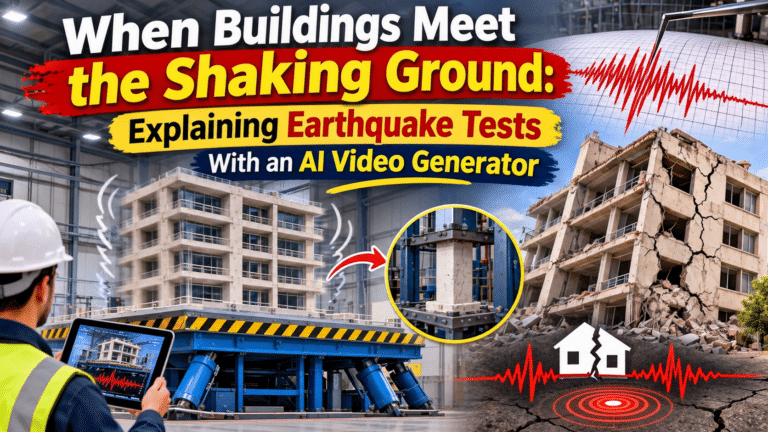
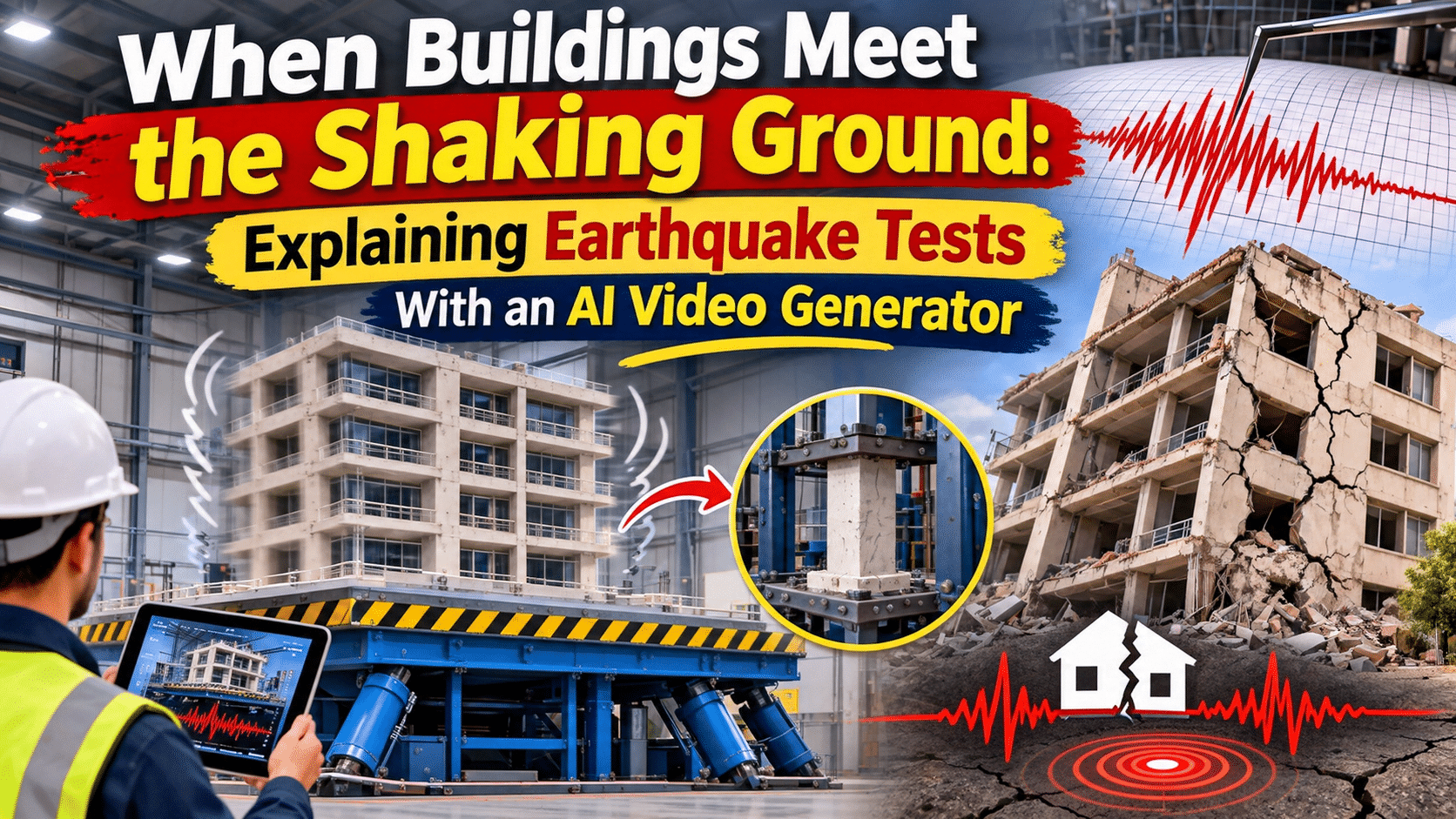
One of the most recognizable tools in earthquake engineering is the shake table. It is a large platform that moves according to programmed patterns, allowing researchers to observe how a model or test structure responds to simulated ground motion. A video could open with a miniature building resting on a laboratory platform. The platform begins moving gently, then follows a stronger sequence while the camera focuses on the model’s response. This gives viewers a visual introduction to the purpose of the equipment before technical explanations begin.
The scene should make clear that a laboratory test is controlled. Researchers select the movement pattern, monitor the structure, and collect information throughout the experiment. It is not simply a building being shaken randomly.
Follow the Forces Through a Structure
When the ground moves, a building does not necessarily move in exactly the same way. Its mass, shape, materials, height, and structural arrangement all influence its response. Movement can create forces within columns, beams, walls, joints, and foundations. An animated explanation can follow these forces through a simplified building. For instance, a video might show the base moving first, followed by the upper floors responding with a slight delay. Arrows or restrained visual highlights can represent changes in movement without overwhelming viewers with complicated equations.
This is also a useful opportunity to introduce the difference between a building that remains stable and one that experiences excessive movement or damage. The animation should illustrate general principles rather than imply that every structure responds identically.
Why Engineers Test More Than One Design
A single model rarely answers every engineering question. Researchers may compare different structural arrangements, materials, connections, or reinforcement strategies. They can then observe how each version behaves under selected test conditions. This comparison makes an effective video sequence. One scene could show two models with different structural features being tested under the same simulated movement. A split-screen presentation might highlight how their responses differ, followed by an explanation of what engineers are investigating.
Dreamina can help creators develop visual concepts for these comparisons from written descriptions. The illustrations can make an educational video easier to follow, but any claims about actual test results must come from reliable research or documented experiments.
Small Details Can Change the Outcome
Earthquake engineering is not only about the overall height or appearance of a building. Connections between structural elements, the placement of reinforcement, material properties, and construction quality can all influence performance. A close-up animation can help explain why these details matter. It might show how a beam connects to a column or how reinforcement is arranged inside a concrete element. A simplified cross-section can reveal features that would normally be hidden behind walls or other surfaces.
These scenes are particularly useful for students who are learning how buildings work. They can also help general audiences understand why structural safety depends on decisions made long before a building is occupied.
Separate Visible Damage From Hidden Information
After a shake-table test, researchers do more than look at whether a model is still standing. They may examine movement records, structural strain, sensor readings, and visible signs of damage. The information helps them understand what happened during the experiment and how the design might be improved.
A video can present this as an investigation rather than a dramatic destruction scene. Start with the tested model, move to a close-up of a damaged connection, and then introduce simplified charts showing the kind of information engineers might examine. It is important not to invent data or present fictional results as laboratory findings. When exact measurements are unavailable, use clearly labelled illustrative graphics instead of numerical claims.
Bring Engineering Knowledge Beyond the Laboratory
Earthquake testing has value beyond academic research. Its findings can contribute to building codes, engineering education, design improvements, and public understanding of structural safety. An accessible video can help connect laboratory work with the decisions that affect real communities. Teachers could use short animations to introduce structural behaviour before a classroom activity. Universities might use them to explain research equipment, while public awareness groups could show why professional building design matters in earthquake-prone regions.
A well-planned video should also explain its limits. Laboratory models cannot represent every feature of a full-sized building, and test results depend on the conditions and methods used. Real construction decisions require qualified engineers, applicable standards, and location-specific assessments.
Conclusion
Earthquake engineering involves careful observation, controlled experiments, and detailed analysis. An AI video generator can make these ideas easier to understand by showing how shake tables work, how structures respond to movement, and why engineers examine different design features. Visual storytelling cannot replace laboratory research or professional expertise. Its value lies in making complex work more approachable, helping students and the wider public understand how engineering knowledge contributes to safer structures.
Frequently Asked Questions
What is a shake table used for?
A shake table reproduces selected ground movements so researchers can observe how models or structures respond under controlled laboratory conditions.
Can an AI-generated video accurately show how a building behaves during an earthquake?
It can illustrate general principles, but the animation must be checked against reliable engineering information. Actual structural behaviour depends on many design and site-specific factors.
Why do engineers test different building designs?
Comparing designs helps researchers investigate how materials, structural arrangements, and connections affect performance under particular test conditions.
Are miniature building models tested in the same way as full-sized structures?
Not exactly. Models can help researchers study important behaviours, but their scale and construction may differ from real buildings. Engineers must account for these differences when interpreting results.
Can these videos be useful for students without an engineering background?
Yes. Clear animations can introduce concepts such as structural movement, reinforcement, and laboratory testing without requiring viewers to understand advanced mathematics first.
About the Author